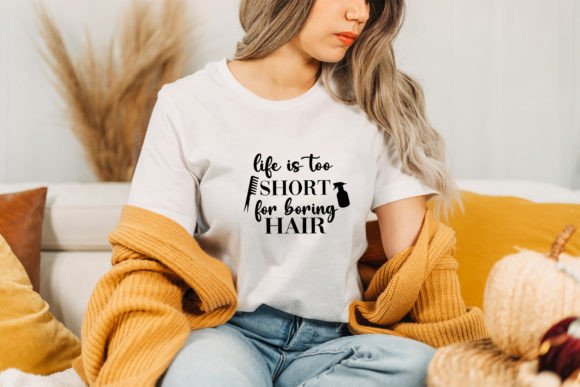
Review: Life is Too Short for Boring Hair Design
As a designer who has spent countless hours staring at digitizing software and troubleshooting thread breaks, I approach every new machine embroidery design with a mix of curiosity and skepticism. We have all seen the trend of sassy, text-based quotes flood the market, but not all of them translate well from a digital screen to actual fabric. When I first encountered the Life is Too Short for Boring Hair graphic, my immediate reaction was one of recognition. This is not just a phrase; it is a statement piece that demands attention. But does it hold up under the needle?
I decided to put this embroidery file through its paces, imagining it as part of a real client project rather than just a digital asset sitting in a folder. The mood it creates is playful yet confident. It speaks directly to a demographic that values self-expression, likely appealing to salon owners, hairstylists, or anyone who treats their hair as their primary accessory. Visually, the layout suggests a balance between bold typography and whimsical flair, which is crucial for maintaining readability once stitched out.
Real-World Application: The Salon Tote Test
To evaluate its practicality, I visualized using this design on a heavy-duty canvas tote bag. This is a common request for my small business clients who run boutique salons or sell handmade hair accessories. The concept was simple: a functional, stylish bag for carrying styling tools or retail products. In this scenario, the Life is Too Short for Boring Hair quote serves as both branding and conversation starter.
When considering sweatshirt embroidery, the design’s personality shines even brighter. Imagine a cozy, oversized crewneck worn by a stylist during long hours behind the chair. The text needs to be legible from a distance, and the visual weight of the letters must complement the soft texture of fleece or cotton blend fabrics. Unlike intricate floral patterns that can get lost in the pile of terry cloth or fleece, a strong typographic design like this retains its impact. It becomes a uniform staple that feels personal rather than corporate.
Stitching Considerations and Fabric Compatibility
One of the most critical aspects of reviewing any digital embroidery file is understanding how it interacts with different materials. While the product description notes that this is a graphics-based instant download, translating it into an applique design or a direct stitch-out requires careful planning. If you are converting this SVG into a stitched format, pay close attention to the stitch density.
For textured fabrics like denim or canvas, a satin stitch border around the letters can provide excellent definition. However, on thinner materials like a standard t-shirt or a baby onesie, high-density fill stitches can cause puckering. Here, I would recommend using a lighter running stitch outline or ensuring that the internal fill is sparse enough to allow the fabric to breathe. Always use a proper stabilizer; for stretchy knits, a cut-away stabilizer is non-negotiable to prevent distortion after washing.
Dark fabrics present another challenge. If you are stitching white or pastel thread colors onto black apparel, the contrast will be striking, but you must ensure the underlying fabric does not show through the stitches. A layer of tear-away stabilizer underneath can help bridge the gap, but testing on scrap fabric is essential. I always advise checking the design in black and white mockups first to gauge contrast before committing to expensive thread spools.
Navigating Small Hoops and Curved Surfaces
Not every project allows for a large hoop. If you are aiming to create an embroidered patch or decorate a cap, space is at a premium. The phrase "Life is Too Short for Boring Hair" is relatively long. On a curved surface like a baseball cap, long horizontal text can distort if not centered perfectly. You might need to adjust the arch of the text or reduce the overall size, which could compromise the legibility of smaller details.
For baby embroidery projects, such as a bib or a nursery wall hanging, the sentiment is adorable, but the execution must be gentle. Ensure that there are no tiny, isolated stitch points that could unravel easily. Smooth corners and connected lettering will survive the wash cycle better than fragmented elements. If the design includes decorative swirls or hair-like flourishes, verify that they are not too fine for the machine to handle without breaking thread.
Commercial Value and Brand Consistency
For Etsy sellers and craft business owners, the value of a design lies in its versatility and market appeal. This particular quote fits neatly into the niche of personalized gifts and self-care merchandise. It enhances the perceived value of a plain item, turning a generic apron into a professional tool for a beautician. When customers see clean, crisp stitching with a relatable message, it builds trust in your craftsmanship.
However, professionalism is key. Sloppy stitching or poor color choices can make even the wittiest quote look amateurish. Use this design to reinforce brand consistency. If your shop focuses on bold, vibrant aesthetics, choose bright, contrasting thread colors. If your brand is more minimalist, stick to monochrome or neutral tones. The design should feel like an intentional part of the finished product, not an afterthought.
Practical Designer Notes
Before you load this into your machine, keep these practical tips in mind:
- Test on Scrap Fabric: Never stitch directly on your final garment. Test tension and density on a similar material first.
- Check Licensing: Since this is sold as a digital graphic or SVG, confirm if the license permits commercial use for physical goods. Some licenses allow selling finished items but prohibit reselling the digital file itself.
- Verify File Formats: The product includes three digital files in a zip folder. Ensure you have the correct format for your specific embroidery software if you are converting it, or use it as a print-ready graphic for sublimation if that is your intended method.
- Contrast is King: Review your design against both light and dark backgrounds. Adjust thread colors to ensure maximum readability.
- Hoop Size Matters: Measure the design dimensions against your available hoop sizes. Do not try to cram a large design into a small hoop, as this leads to registration errors.
In conclusion, Life is Too Short for Boring Hair is a strong contender for designers looking to add personality to their custom apparel and handmade product lines. It bridges the gap between fun and professional, making it suitable for a wide range of applications from holiday embroidery gifts to everyday small shop product inventory. With careful attention to stitch technique and fabric choice, it can become a standout element in your portfolio.