Reviewing the Clover Prince SVG for St. Patrick’s Embroidery
As an experienced designer who spends more time staring at stitch maps than I care to admit, I approach every new machine embroidery design with a mix of curiosity and skepticism. We have all been there: you download a file that looks crisp on the screen, only to watch it turn into a tangled mess of thread breaks and puckering on the fabric. When I first pulled up the Clover Prince, St. Patrick's Svg, my initial reaction was one of cautious optimism. The concept is timely, tapping into the evergreen demand for holiday-themed crafts, but the execution details are what truly matter for a professional result.
This review is not just about whether the graphic looks cute. It is about determining if this asset can hold its own in a real-world embroidery project. Whether you are an Etsy seller looking to stock up for March, a boutique owner creating custom apparel, or a hobbyist making personalized gifts, understanding how a vector file translates to thread is crucial. Let us break down how this design performs when moved from the digital realm of Graphics into the tactile world of Crafts.
First Impressions and Visual Personality
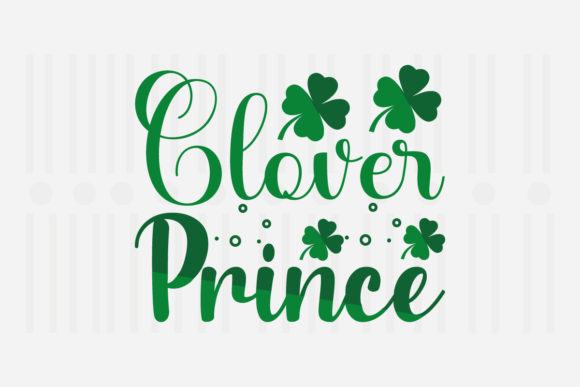
The Clover Prince, St. Patrick's Svg carries a playful yet regal mood. The combination of the classic shamrock motif with princely elements creates a visual narrative that is perfect for children’s items or whimsical adult apparel. The layout appears balanced, which is a good sign for embroidery. In machine work, asymmetry can sometimes lead to uneven pull on the fabric, causing distortion. Here, the central focus seems well-grounded.
What stands out immediately is the potential for color customization. The product description notes that the design allows for easy color changes and comes with source files in EPS or SVG formats. For an embroidery digitizer, this is a double-edged sword. While having the vector source is excellent for resizing and editing before digitization, it means you likely need to convert this graphic into a proper embroidery file yourself unless a pre-digitized version is provided separately. If you are using this as a base for manual digitization, the clean lines of the SVG will make your job significantly easier, allowing for precise placement of satin stitch borders and fill stitch areas.
Real-World Application: From Screen to Stitch
I recently considered a scenario involving a custom order for a local boutique: a set of matching sibling sweatshirts for St. Patrick’s Day. The client wanted something unique, not the generic "Kiss Me I'm Irish" text found everywhere. The Clover Prince, St. Patrick's Svg fit the brief perfectly. However, translating this to a sweatshirt embroidery project requires careful planning.
On a thick, textured fabric like fleece or heavy cotton blend, fine details can get lost. If this design relies heavily on tiny elements or thin lines, they may disappear into the nap of the fabric. My advice would be to simplify any intricate internal details if you are stitching on textured materials. For smoother fabrics, such as a high-quality cotton tote bag or a baby onesie, the design should shine. The contrast between the green clover elements and any gold or yellow accents used for the "prince" aspects would create a striking visual appeal on a white or navy background.
For those running a craft business, versatility is key. This design could easily be adapted for an embroidered patch, which is currently trending in handmade markets. Patches require dense stitching to prevent fraying and ensure durability. If you digitize this SVG for patch use, consider adding a sturdy border and increasing the stitch density slightly to give it a premium, substantial feel. It could also work beautifully on a tote bag design, serving as a focal point that draws the eye without overwhelming the canvas material.
Navigating Technical Challenges
While the aesthetic is strong, we must address where caution is needed. Any design with sharp corners or small text-like elements needs scrutiny. If the "Prince" aspect includes a crown or specific detailing, ensure these are not too small for your chosen hoop size. Stitching on curved surfaces, like caps or hats, introduces another layer of complexity. The tension on a cap frame is different from a flat hoop, and designs that are too wide or dense can cause the fabric to pucker or the hat to lose its shape.
Furthermore, consider the fabric type. If you are applying this to stretchy performance wear or thin rayon, you must use the correct stabilizer. A cut-away stabilizer is often safer for garments that will be washed frequently, ensuring the finished product maintains its integrity over time. Always test the design on scrap fabric first. Do not skip this step. Check how the thread colors interact with the fabric background. A dark green thread on a black shirt will vanish, while a bright emerald on white will pop. Use black and white mockups to verify that the shape remains recognizable even without color.
Commercial Viability and Brand Consistency
For commercial embroidery professionals, the value of a design lies in its ability to enhance brand perception. A sloppy stitch-out reflects poorly on your shop, regardless of how cute the original graphic was. The Clover Prince, St. Patrick's Svg offers a solid foundation, but the final quality depends on your digitization skills. Ensure that your thread colors are consistent with your brand palette. If you specialize in pastel baby items, adjust the greens to softer mint tones. If you cater to bold, modern aesthetics, stick to deep forest greens and metallic golds.
Customer trust is built on consistency. If you sell this as part of a personalized gift line, ensure that the sizing is uniform across different products. A design that looks proportional on a mug print might look cramped on a small baby bib. Since the source file is scalable, take advantage of this to create multiple size variations tailored to specific items like aprons, pillow covers, or kitchen towels.
Final Designer Notes
Before you commit to producing inventory or listing this as a digital embroidery file for others to use, verify the licensing terms. The description mentions it is ready to print and includes source files, but commercial rights for selling physical embroidered items versus reselling the digital file itself can differ. Always clarify this to protect your small shop product line.
In summary, the Clover Prince, St. Patrick's Svg is a promising asset for your spring collection. It offers the flexibility needed for various design assets and has the charm required for holiday embroidery. However, its success relies entirely on thoughtful digitization and material selection. Treat it as a raw ingredient rather than a finished meal. With the right stabilizer, thread choice, and attention to stitch density, it can become a standout piece in your portfolio, delighting customers and enhancing your reputation for quality handmade goods.