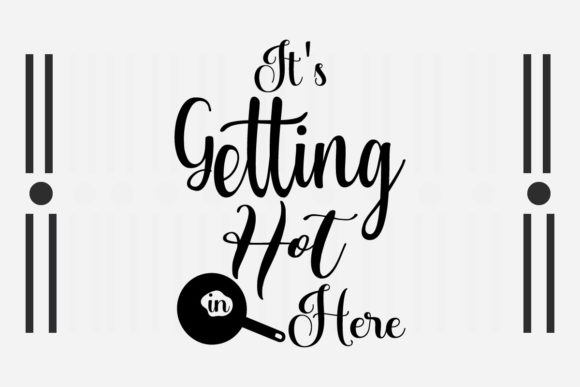
Reviewing It s Getting Hot in Here SVG for Stitchers
As a designer who spends half my life digitizing patterns and the other half testing them on actual fabric, I have learned to look past the glossy preview images. When I first opened It s Getting Hot in Here SVG, my immediate reaction was not just about the aesthetic appeal of the quote, but about its structural integrity for real-world application. This is not merely a graphic; it is a potential asset for your craft business, provided you understand how it translates from screen to needle.
The design centers around a playful, bold statement that immediately sets a humorous and warm tone. In the world of Crafts and handmade goods, personality sells. However, personality must be backed by technical precision. The layout of this SVG suggests a design that relies heavily on clean lines and readable typography. For an embroidery project, this means we are likely dealing with a mix of satin stitches for borders or smaller text elements and fill stitches for larger graphical components. The visual personality is casual yet confident, making it a natural fit for products that aim to spark conversation or convey a sense of cozy comfort.
Real-World Application: The Kitchen Towel Test
To evaluate It s Getting Hot in Here SVG properly, I imagined a specific scenario: a custom order for a boutique kitchenware shop. The client wanted a set of high-quality linen tea towels as holiday gifts. This is a classic use case for this type of quote. Linen, however, is a tricky fabric. It has a loose weave and can be prone to shifting under the needle.
If I were stitching this design onto a linen towel, the first thing I would check is the stitch density. Dense areas in the SVG, if converted poorly into an embroidery file, can cause the fabric to pucker or tear. Since the product description highlights that the file is "Ready to print" and includes source files like EPS or SVG, it implies a vector-based origin. This is good news for scalability, but it also means the burden of proper digitization falls on you or your digitizer. You cannot simply import an SVG into your embroidery software and expect magic. You must define the stitch types.
For the text portions of It s Getting Hot in Here SVG, I would recommend using a tight satin stitch if the letters are thick enough, or a carefully planned fill stitch if they are broader. Running stitch might be too fragile for a item that will be washed frequently. The humor of the phrase pairs perfectly with the utility of a pot holder or towel, creating a personalized gift that feels thoughtful rather than mass-produced.
Versatility Across Product Lines
Beyond kitchen linens, this design shows promise in several other categories. For custom apparel, such as a heavyweight sweatshirt, the design needs to breathe. Sweatshirt fleece is thick and plush. If the stitch density is too high, the garment will become stiff and uncomfortable. Conversely, if the density is too low, the backing stabilizer might show through, ruining the professional look of your finished product.
I also see potential for this design in the realm of embroidered patch creation. Patches are durable, versatile, and allow for high-density stitching without worrying about fabric distortion. A patch featuring this quote could be sold as a standalone accessory or applied to denim jackets and tote bags. The bold nature of the quote ensures it remains legible even at smaller sizes, which is crucial for patch work.
For Etsy sellers and small shop owners, the ability to change colors easily is a significant advantage. The product notes mention "100 Color Changeable," which suggests the vector paths are well-organized. This allows you to create multiple variations for your online listings without redesigning the entire asset. You can offer a summer version with bright yellows and oranges, or a winter version with deep reds and greens, catering to seasonal trends in holiday embroidery.
Technical Considerations and Pitfalls
While the design is promising, there are areas where caution is required. The phrase contains varying character widths. In embroidery, tiny details can get lost if the needle size is too large or the thread tension is off. Before committing to a full production run, you must test the design on scrap fabric that matches your final material. This is non-negotiable for maintaining customer trust and ensuring brand consistency.
Pay close attention to the corners of the letters. Sharp angles in an SVG can translate into bulky knots or thread breaks in machine embroidery if not properly under-stitched. I recommend reviewing the design in your embroidery software’s simulation mode. Look for any areas where the stitch direction changes abruptly. These are weak points that may require manual adjustment.
Another critical factor is the choice of stabilizer. For stretchy fabrics like t-shirts, a cut-away stabilizer is essential to prevent the design from distorting over time. For woven fabrics like canvas tote bags, a tear-away might suffice, but only if the stitch density is moderate. Always confirm the hoop size required for the full design. If the quote is long, it might not fit in a standard 4x4 inch hoop, requiring you to split the design or use a larger machine.
Enhancing Visual Appeal and Value
The ultimate goal of using It s Getting Hot in Here SVG is to create a product that stands out in a crowded market. The visual appeal of this design lies in its simplicity and relatability. It does not rely on complex imagery that might date quickly. Instead, it uses typography and sentiment to connect with the buyer.
To maximize the value of this digital embroidery file, consider how it interacts with thread colors. High contrast is key for readability. A dark thread on a light fabric, or vice versa, will make the quote pop. Avoid low-contrast combinations unless you are aiming for a subtle, tonal effect, which may reduce legibility. Testing the design in black and white mockups can help you judge the structural balance before you even thread the machine.
For those selling design assets or finished goods, professionalism is paramount. A cleanly stitched design reflects well on your brand. It signals to the customer that you care about quality. Whether you are creating a baby embroidery item for a shower gift or a rugged apron for a chef, the execution of this quote must be flawless. Check for loose threads, ensure proper trimming, and press the finished item to give it a crisp, retail-ready appearance.
Final Verdict for Makers
It s Getting Hot in Here SVG is a versatile addition to your library of Graphics for embroidery. It offers a blend of humor and utility that resonates with a wide audience. However, its success depends entirely on your technical approach. Do not treat it as a plug-and-play solution without verification. Respect the materials, understand the mechanics of your machine, and prioritize the end-user experience.
By taking the time to test, adjust, and refine, you can transform this simple SVG into a high-value handmade product. Whether you are decorating a tote bag design for a local market or creating a line of sweatshirt embroidery for your online store, this design has the potential to perform well. Just remember: the devil is in the details, and in embroidery, those details are made of thread.
Before you begin your next embroidery project, review the source files included in the package. Confirm that the EPS or SVG formats are compatible with your digitizing software. If you are new to converting vectors to stitch files, consider starting with a small test piece. This practical diligence will save you time, money, and frustration in the long run, ensuring that every item you produce meets the high standards your customers expect.