Reviewing Lucky, St. Patrick’s SVG for Embroidery
As a designer who spends half my life staring at stitch previews and the other half untangling thread nests, I approach every new machine embroidery design with a healthy dose of skepticism. We have all been there: you download a file that looks crisp on the screen, only to watch it turn into a puckered mess on actual fabric. That is why when I recently evaluated Lucky, St. Patrick’s Svg, I did not just look at the aesthetics. I looked at its potential as a functional embroidery file for real-world applications.
This graphic falls under the broader categories of Crafts and Graphics, but for us in the trade, it represents a specific challenge and opportunity. The product description highlights that this is a St. Patrick’s SVG Quote, ready to print, with easy color changes and source files included in EPS or SVG formats. While these features are standard for digital assets, their implication for embroidery is where the real value lies. Let us break down how this design performs when moved from the vector world to the needle and thread.
First Impressions and Visual Personality
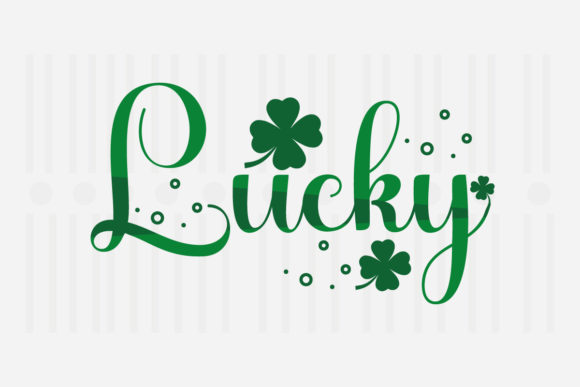
The first thing you notice about Lucky, St. Patrick’s Svg is its clean, bold structure. In the context of holiday embroidery, we often see overly complex shamrocks or intricate Celtic knots that demand high stitch counts and dense fill areas. This design, however, leans into simplicity. The mood is cheerful and accessible, avoiding the clutter that can plague seasonal designs. For an Etsy seller or small shop owner, this clarity is crucial. It reads well from a distance, which is essential for items like tote bags or sweatshirts where the design needs to make an immediate visual impact.
The layout suggests a strong typographic element combined with iconic imagery. When I visualize this as a finished product, I see it working best on items that benefit from a modern, minimalist aesthetic. It does not scream "novelty gift" in a cheap way; instead, it feels like a curated piece of custom apparel or home decor. The visual personality is friendly yet professional, making it suitable for both personal gifts and commercial boutique lines.
Real-World Application: The Tote Bag Test
To truly understand the viability of this design, I imagined a specific scenario: preparing a custom embroidered canvas tote bag for a local craft fair. Canvas is a sturdy fabric, but it has a distinct texture that can interfere with fine details. Because Lucky, St. Patrick’s Svg appears to rely on bold shapes rather than micro-details, it translates well to this medium.
If you were to use this as a tote bag design, the solid areas would likely require a fill stitch that is dense enough to cover the weave of the canvas but not so dense that it causes stiffness. The open spaces in the lettering or graphic elements would need careful attention to ensure the background fabric does not show through unintentionally. This is where the "100 Color Changeable" feature mentioned in the description becomes practical. You can test various thread combinations to find the right contrast against natural or dyed canvas without altering the core structure of the design.
Beyond totes, this design is a strong candidate for sweatshirt embroidery. The softness of fleece or cotton blends requires a design that does not feel heavy or scratchy against the skin. A simplified SVG-based design often allows for lighter density settings compared to complex photographic conversions, making it more comfortable for wearables. It could also serve as a charming baby embroidery motif on a onesie, provided the size is scaled down appropriately and the edges are smoothed to prevent irritation.
Navigating Technical Challenges
While the design is promising, there are areas where caution is necessary. Since the source files are EPS or SVG, they are vector-based. This is excellent for scalability, but it means you, the embroiderer, are responsible for the digitizing process or ensuring the converted embroidery file is optimized. If you are using this as a base for an applique design, the cut lines must be precise. Any jagged edges in the vector will translate to messy fabric cuts.
Consider the stitch density. Holiday themes often tempt designers to over-fill green areas. However, too much density on stretchy fabrics like jersey knits can cause tunneling. I recommend testing the design on scrap fabric first, specifically using the same stabilizer you plan to use for the final product. A cut-away stabilizer might be necessary for garments that will undergo frequent washing, while a tear-away could suffice for decorative pillows.
Another critical factor is the hoop size. If you intend to use this on curved surfaces like caps, you must ensure the design fits within a smaller hoop without losing legibility. Tiny lettering or thin lines can get lost if the hoop tension is too tight or if the fabric shifts. Always inspect small details closely. If the design includes fine serifs or delicate shamrock stems, verify that your machine can handle them at the intended size. If not, consider simplifying those elements or increasing the overall scale.
Commercial Viability and Brand Consistency
For commercial embroidery professionals, consistency is key. Lucky, St. Patrick’s Svg offers a level of versatility that supports brand consistency. Whether you are creating a line of personalized gifts or stocking up on small shop product inventory, the ability to easily change colors allows you to adapt the design to different customer preferences without redesigning from scratch. This flexibility enhances buyer engagement, as customers appreciate options.
Moreover, the clean lines contribute to a perception of quality. A sloppy, pixelated, or poorly stitched design erodes customer trust. In contrast, a crisp, well-executed embroidery project signals professionalism. This design, when properly digitized and stitched, can elevate the perceived value of your handmade product. It works well for holiday embroidery collections, but its simplicity allows it to transcend the season if used subtly, perhaps as a small chest logo on a year-round apparel item.
Practical Designer Notes
Before you commit to a large production run, keep these practical tips in mind:
- Test on Scrap Fabric: Never skip this step. Check how the thread interacts with your specific material.
- Check Thread Contrast: Use black and white mockups to ensure the design remains legible without color cues.
- Verify Licensing: The description mentions source files are included, but always confirm whether the license permits commercial sales of finished items. This is crucial for Etsy sellers and craft business owners.
- Stabilizer Selection: Match your stabilizer to the fabric weight. Heavy designs on light fabric will pucker.
- Inspect Small Details: Zoom in on the vector file. Are there any stray points or overlapping paths that could confuse your digitizing software?
In conclusion, Lucky, St. Patrick’s Svg is a versatile asset for the modern maker. It bridges the gap between digital design assets and tangible embroidery projects with ease. By paying attention to technical details like stitch density and fabric choice, you can transform this simple graphic into a high-value product that resonates with customers. Whether you are decorating aprons, creating embroidered patches, or designing unique printable mockup previews for your online store, this design offers a solid foundation for creative expression.