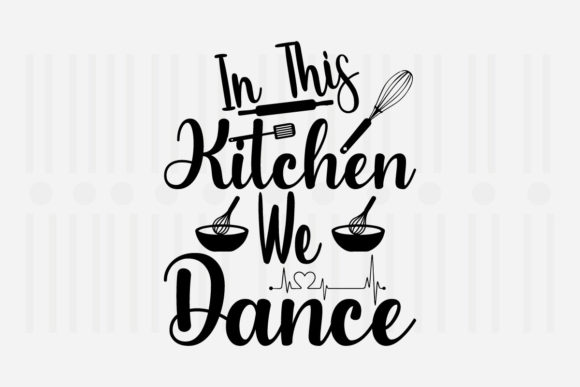
Live Love Cook Kitchen SVG: A Designer’s Embroidery Review
As an embroidery designer who has spent years digitizing and testing files for real-world production, I approach every new asset with a critical eye. We are not just looking at pretty pictures; we are looking at stitch paths, density management, and commercial viability. When I first loaded the Live Love Cook,Kitchen SVG into my workspace, my immediate reaction was one of cautious optimism. This is a popular niche—kitchen-themed decor and apparel are perennial bestsellers on platforms like Etsy—but the market is saturated. The question is not whether the phrase is catchy, but whether this specific graphic holds up under the needle.
First Impressions and Visual Personality
The design exudes a warm, domestic mood that fits perfectly within the home and hearth aesthetic. Visually, the layout is balanced, with a clear hierarchy that guides the eye. For those of us working in Crafts and digital Graphics, the clean lines suggest a modern, minimalist approach rather than a cluttered vintage style. This simplicity is actually a strength for embroidery. Complex, overly detailed graphics often turn into a muddy mess when stitched out, especially on textured fabrics like terry cloth or heavy canvas.
The fact that this file is provided as an EPS and SVG at 300dpi indicates it is vector-based before conversion. This is crucial. It means the shapes are mathematically defined, allowing for crisp edges. However, as an embroiderer, I know that a sharp vector line does not automatically translate to a sharp satin stitch. I immediately looked at the curves in the lettering. They appear smooth, which suggests that if digitized correctly, the thread flow will be consistent without excessive jumps or trims.
Real-World Application: The Apron Test
To truly evaluate Live Love Cook,Kitchen SVG, I imagined a specific client project: a custom embroidered apron for a local boutique selling handmade kitchenware. The client wanted something that felt personal but professional. I visualized placing this design on the bib of a high-quality cotton twill apron.
In this scenario, the design performs well. The text is legible from a distance, which is essential for apparel. If I were stitching this onto a tote bag or a tea towel, the scale would need adjustment, but the core structure remains intact. The "ready to print" nature of the source file makes it easy to create printable mockups for client approval before a single thread is loaded into the machine. This saves time and builds trust with buyers who want to see exactly what their personalized gift will look like.
Versatility Across Products
Beyond aprons, this design has legs. It works naturally on:
- Sweatshirt embroidery: Centered on the chest for a cozy, casual look.
- Tote bag design: Large format on canvas, requiring dense fill stitches for coverage.
- Embroidered patch: Cut-out style for iron-on applications.
- Holiday embroidery: Paired with seasonal motifs for Christmas or Thanksgiving gifts.
The ability to change colors easily is a significant advantage here. Kitchen themes often rely on specific palettes—rustic reds, sage greens, or classic blacks. Being able to swap thread colors quickly allows me to match the branding of a small shop product or the color scheme of a customer’s kitchen.
Technical Considerations for Stitching
While the graphic is strong, there are areas where caution is required. As a reviewer, I must point out potential pitfalls for less experienced users. The primary concern with any text-based machine embroidery design is the size of the lettering relative to the hoop.
If you attempt to stitch this on a small hoop, such as a 4x4 inch frame, the smaller words may become illegible. Satin stitches have a maximum width before they become unstable. If the design relies on thin strokes, you might need to convert them to running stitches or add a backing stabilizer to prevent puckering. I always advise testing the design on scrap fabric first. Check the stitch density. If the original digitizer packed too many stitches into the letters, the fabric will pucker, and the thread may break.
Another critical factor is fabric texture. On a smooth cotton, this design will look crisp. On a textured waffle weave or a fuzzy fleece, the finer details might get lost. In those cases, I recommend using a cut-away stabilizer to provide a firm foundation. For stretchy fabrics like jersey t-shirts, a hoop-and-stick method with tear-away stabilizer is essential to maintain the shape of the letters.
Commercial Viability and Brand Consistency
For Etsy sellers and creative entrepreneurs, the value of a design lies in its ability to sell. Live Love Cook,Kitchen SVG taps into a timeless sentiment. It is not trendy in a way that will date quickly; it is a staple. This longevity is key for building a consistent brand. When customers see high-quality stitching on a well-chosen garment, their trust in your craft business grows.
However, professionalism is paramount. Before selling finished items, you must confirm the licensing terms. While the product description mentions it is ready for use, always double-check if the license covers commercial sales of physical goods. Some licenses allow for unlimited physical sales, while others have caps. Since this is a digital asset, ensuring you have the right to use it for commercial embroidery projects is non-negotiable.
Practical Designer Notes
Before you commit to a full production run, consider these steps:
- Test on multiple fabrics: See how the threads interact with dark vs. light backgrounds.
- Check contrast: Ensure the thread color stands out against the fabric. A white thread on a cream apron might vanish.
- Inspect small details: Zoom in on the vector file. Are there any stray points or overlapping paths that could cause machine errors?
- Mockup in black and white: This helps you judge the balance and weight of the design without the distraction of color.
Final Verdict
The Live Love Cook,Kitchen SVG is a solid addition to any designer’s library. It is not revolutionary, but it is reliable. Its strength lies in its clarity and adaptability. For those creating handmade products for the home, it offers a clean, professional look that appeals to a broad audience. Just remember that the quality of the final finished product depends heavily on your digitizing settings, stabilizer choice, and thread quality. Treat this file as a strong foundation, but apply your own technical expertise to ensure every stitch counts. Whether you are making a baby embroidery item for a shower gift or stocking your small shop product line, this design delivers when handled with care.