Review: My Kitchen Was Clean Last Week SVG for Embroidery
As a designer who spends half my life digitizing and the other half stitching, I have learned that not every cute quote translates well to thread. We often browse Crafts marketplaces looking for the next best-seller, scrolling through endless Graphics packs, hoping to find something that balances humor with technical feasibility. Recently, I pulled the My Kitchen Was Clean Last Week Svg into my workspace to evaluate its potential for real-world application. This isn’t just about whether the text is legible; it is about how this design behaves when subjected to the mechanical realities of an embroidery machine and the aesthetic demands of a paying customer.
First Impressions and Visual Personality
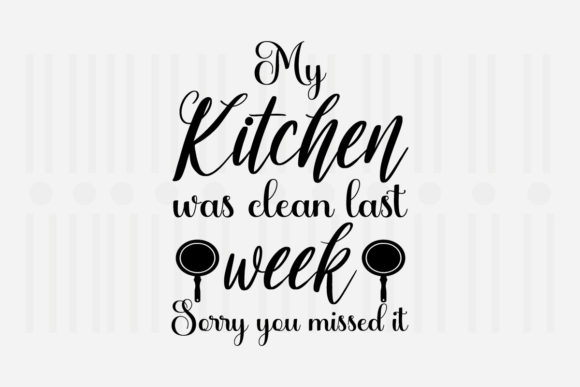
The phrase itself carries a specific mood: relatable, slightly chaotic, and undeniably humorous. It appeals to the busy parent, the overwhelmed host, or anyone who finds comfort in the shared struggle of domestic maintenance. Visually, the layout of My Kitchen Was Clean Last Week Svg appears straightforward. In the digital preview, the lines are clean, which is a promising sign. However, a vector file on a screen is a lie until it hits the fabric. The simplicity of the design suggests it relies heavily on typography rather than complex imagery. This is generally good news for stitchers, as it reduces the risk of thread breaks caused by excessive density, but it places a higher burden on font choice and spacing.
When I imagine this stitched out, I see it working best with a bold, sans-serif or a playful handwritten script. If the source file uses a thin, delicate serif, we might run into trouble with stitch definition. The "easy change color" feature mentioned in the product description is crucial here. A design like this lives or dies by contrast. On a white tea towel, dark navy or charcoal thread will pop. On a black tote bag, you need bright whites or vibrant yellows. The ability to tweak these colors quickly in your software before digitizing or printing is a significant workflow advantage.
Real-World Application: From Tote Bags to Sweatshirts
I decided to test this concept mentally against a few common projects. First, consider a canvas tote bag design. Canvas is sturdy, forgiving, and holds stitches well. Placing this quote across the center of a grocery tote creates an instant conversation starter. It transforms a utilitarian item into a handmade product with personality. For an Etsy seller, this is low-risk inventory. It appeals to a broad demographic and requires minimal setup time.
Next, I visualized it on a sweatshirt embroidery project. Here, the stakes are higher. Sweatshirt fleece is thick and prone to shifting. If the lettering in My Kitchen Was Clean Last Week Svg is too small, the stitches will sink into the pile, making the text unreadable. I would recommend sizing this up significantly for apparel. A chest-left placement might feel too small for the full phrase, so a large back print or a centered chest design using larger hoop sizes would be more effective. The humor lands better when it is easily readable from a distance.
What about baby embroidery? While the sentiment is funny, it might not fit the typical aesthetic of nursery decor unless it is intended for a humorous gift for new parents who are surviving on coffee and dry shampoo. In that context, a soft pastel thread on a muslin burp cloth could work, provided the stabilizer is robust enough to prevent puckering on the delicate fabric.
Technical Considerations for Stitchers
Before you load this into your machine, there are critical technical factors to address. The product description notes that it includes EPS or SVG files. For embroidery, you will likely need to convert this vector into a stitch file using your preferred digitizing software, unless you are using a printer-friendly method for sublimation or heat transfer. If you are digitizing it yourself, pay close attention to stitch density. Text designs often suffer from being too dense, which causes the fabric to pucker, or too sparse, which leaves gaps.
Use a combination of satin stitch for smaller letters and fill stitch for larger ones if you want a premium look. However, satin stitches have a width limit; going too wide without underlay stitches will result in loose threads that snag easily. For a custom apparel piece, durability is key. Ensure your underlay is sufficient to anchor the top stitches, especially if the final product will be washed frequently.
Stabilizer choice is non-negotiable. For stretchy fabrics like t-shirts, a cut-away stabilizer is essential to maintain the shape of the letters over time. For woven fabrics like aprons or tea towels, a tear-away might suffice, but I always prefer a light cut-away for text to ensure crisp edges. Always test the design on scrap fabric first. Check how the thread colors interact with the fabric texture. A rough linen might chew up fine details, while smooth cotton will showcase the precision of the stitches.
Commercial Viability and Brand Consistency
For commercial embroidery professionals, this design offers versatility. It fits into the "relatable home goods" niche, which remains strong year-round. Unlike holiday-specific designs, this quote has evergreen appeal. It can be marketed as a housewarming gift, a birthday present for a friend, or a self-indulgent purchase for a home cook. When creating printable mockup assets for your online shop, show the design on various backgrounds. Demonstrate how it looks on a dark mug versus a light apron. This helps buyers visualize the finished product and increases conversion rates.
However, be mindful of licensing. The description states it is ready to print and includes source files, but always confirm whether the license allows for unlimited commercial sales of physical items. Most SVG licenses do, but it is vital to read the specific terms included in the download. Protecting your craft business means respecting intellectual property rights while leveraging high-quality design assets to build your brand.
Final Verdict
My Kitchen Was Clean Last Week Svg is a solid addition to a designer’s library, provided it is handled with technical care. It is not a plug-and-play solution for every fabric type, but with proper digitizing and material selection, it becomes a high-value asset. It bridges the gap between digital convenience and tactile craftsmanship. For the small shop product lineup, it offers a quick turnaround time and high emotional resonance with customers. Just remember: test your tension, check your hoop size, and let the humor shine through clean, crisp stitching.